The development and delivery of medicinal products is both an art and a science. Beyond the rigorous research and clinical trials, the process involves creativity, collaboration, and a deep understanding of human needs. The pharmaceutical arts encompass:
Discovery & Innovation: Identifying new compounds and therapeutic approaches requires not only scientific expertise but also imagination and persistence.
Formulation & Design: Transforming active ingredients into effective, safe, and accessible medicines involves chemistry, engineering, and the art of problem-solving.
Manufacturing & Quality: Producing medicines at scale demands precision, consistency, and a commitment to the highest standards of quality and safety.
Distribution & Access: Ensuring that life-saving treatments reach those in need involves logistics, policy, and a dedication to equity and global health.
Communication & Trust: Building public confidence in new therapies relies on clear communication, transparency, and ethical responsibility.
Pharmaceuticals are the result of diverse talents—scientists, engineers, clinicians, designers, logisticians, and communicators—working together to turn discoveries into real-world solutions that save lives. This ongoing journey blends technical mastery with the human touch, shaping the future of medicine for all.
The pharmaceutical industry is a dynamic and complex field dedicated to discovering, developing, and delivering medicines that improve and save lives. Success in this industry depends on the integration of rigorous scientific research, robust regulatory frameworks, and innovative technologies.
At the heart of pharmaceutical progress is a structured clinical development process, designed to ensure that new drugs are both safe and effective. This process is governed by global standards set by the International Council for Harmonisation (ICH), whose guidelines help harmonize regulatory requirements and facilitate the development and approval of medicines worldwide.
In recent years, automation and digital transformation have become essential to the industry. Automation in laboratories and manufacturing environments enhances efficiency, data integrity, and reproducibility, while digital tools enable better data management, advanced analytics, and streamlined operations across the drug development lifecycle.
This framework explores three interconnected pillars shaping the future of pharmaceuticals:
Clinical Development Process: The pathway from discovery to approval, including preclinical research, clinical trials, and regulatory submission.
ICH Regulations: The global standards that guide quality, safety, and efficacy in drug development.
Automation and Digitalization: The technologies transforming research, manufacturing, and regulatory compliance.
Understanding these areas is key to appreciating the challenges and opportunities facing the pharmaceutical sector as it strives to deliver innovative therapies to patients around the world.
IRR depends on both efficiency and value creation#
R&D Spending:
Increased from $139.2 billion in 2022 to $145.5 billion in 2023 (4.5% rise).
Asset Development Costs:
Average cost to progress an asset from discovery to launch remains at $2.3 billion (steady from 2022 to 2023).
Peak Sales Forecast:
Average forecast peak sales per pipeline asset dropped from $389 million in 2022 to $362 million in 2023.
Continued decline from 2021 peak of $500 million, largely due to high-value COVID-19 assets.
1.1 - Artificial Intelligence
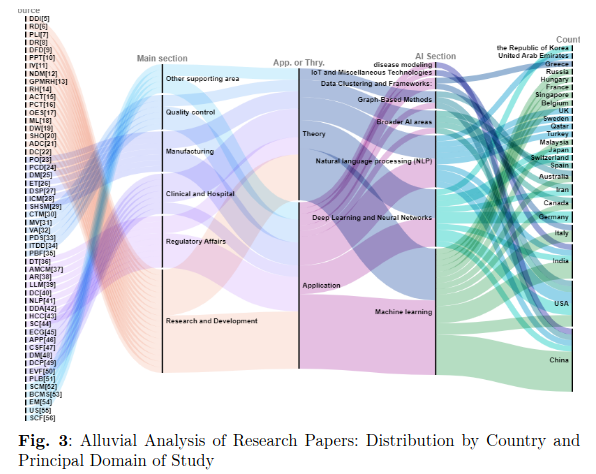
Artificial Intelligence and Pharma — how LLMs, graph-based approaches, and machine learning are transforming pharmaceutical research and development.
There has been a lot of hype around AI and pharma - how it can reduce costs and remove a lot of manual labor that for sometime was always seen as necessary human activities, that is writing. But now with large language models, AI can really start eroding away at those manual human tasks and launch us into the Industry 5.0 mentality of workers with AI assistance to do their jobs.
Machine Learning Techniques: This category encompasses a variety of algorithms, including Support Vector Machines (SVM), Reinforcement Learning, and other traditional machine learning methods.
Deep Learning and Neural Networks: This includes models like Convolutional Neural Networks (CNN), Transfer Learning, Digital Twins (DTs), and other approaches based on neural network architectures.
Natural Language Processing (NLP): This segment covers all aspects of NLP, including Large Language Models (LLMs).
Graph-Based Approaches: Involves methods that leverage network and knowledge graphs, along with various graph-related techniques.
Data Clustering and Frameworks: Encompasses specialized frameworks such as Density-Based Spatial Clustering of Applications with Noise (DBSCAN), Federated Learning Frameworks, and other clustering or data framework technologies.
IoT and Miscellaneous Technologies: A broad category for various technologies, including the Internet of Things (IoT) and others that don’t neatly fit into the previously mentioned categories.
1.2 - Introduction to Pharmaceutical Regulations & Guidelines
The pharmaceutical industry operates within one of the most highly regulated environments in the world. Regulations and guidelines are essential to ensure that medicines are safe, effective, and of the highest quality—protecting patients and supporting public health. These requirements span every stage of the drug lifecycle, from discovery and development to manufacturing, distribution, and post-market surveillance.
This section introduces the major regulatory domains that shape pharmaceutical practice:
International Guidelines (ICH): The International Council for Harmonisation (ICH) brings together regulatory authorities and industry to develop harmonized guidelines on quality, safety, efficacy, and multidisciplinary topics. These standards are adopted globally and form the backbone of pharmaceutical regulation. Explore ICH Guidelines »
Electronic Records & Data Integrity (21 CFR Part 11): Digital transformation in pharma requires strict controls on electronic records and signatures. Regulations like the U.S. FDA’s 21 CFR Part 11 and the EU’s Annex 11 ensure that data is accurate, secure, and human-readable throughout its lifecycle. Learn about 21 CFR Part 11 »
Good Practice Standards (GxP): GxP encompasses Good Manufacturing Practice (GMP), Good Clinical Practice (GCP), and Good Laboratory Practice (GLP), among others. These standards govern how medicines are developed, tested, produced, and monitored.
Global and Local Regulations: In addition to ICH and FDA requirements, companies must comply with region-specific regulations (e.g., EMA in Europe, PMDA in Japan, NMPA in China) and adapt to evolving expectations around topics like data privacy, pharmacovigilance, and supply chain security.
Staying compliant requires a deep understanding of both the letter and the spirit of these regulations. This section serves as a hub for exploring the foundational guidelines and regulatory expectations that underpin pharmaceutical innovation and patient safety.
Regulatory compliance is not just a legal obligation—it is a commitment to quality, transparency, and trust in every medicine.
1.2.1 - International Council for Harmonisation
The International Council for Harmonisation of Technical Requirements for Pharmaceuticals for Human Use (ICH) is unique in bringing together the regulatory authorities and pharmaceutical industry to discuss scientific and technical aspects of pharmaceuticals and develop ICH guidelines
The International Council for Harmonisation of Technical Requirements for Pharmaceuticals for Human Use (ICH) is unique in bringing together regulatory authorities and the pharmaceutical industry to discuss scientific and technical aspects of pharmaceuticals and develop harmonised guidelines. Since its inception in 1990, ICH has evolved to address the increasingly global nature of the pharmaceutical sector, with its guidelines now adopted by a growing number of regulatory authorities worldwide. The mission of ICH is to achieve greater harmonisation to ensure that safe, effective, and high-quality medicines are developed, registered, and maintained efficiently while meeting rigorous standards. As of 2015, ICH has expanded to include 23 Members and 35 Observers. (ref)
The ICH Core guidelines form the foundation for global pharmaceutical quality, safety, and efficacy standards. These guidelines are organized into several series, including:
Quality (Q) Guidelines: Covering topics such as stability, analytical validation, impurities, and pharmaceutical development. See: ICH Quality Guidelines
Safety (S), Efficacy (E), and Multidisciplinary (M) Guidelines: Addressing nonclinical safety, clinical studies, and cross-cutting topics.
Explore the ICH Core documents for detailed breakdowns of each major guideline, including Q1–Q14 and their practical implications.
Quality by Design (QbD) is an advanced approach promoted by ICH to ensure pharmaceutical quality through proactive design and robust process understanding. QbD principles are embedded in guidelines such as ICH Q8–Q12, focusing on:
Systematic development and manufacturing
Risk management and knowledge management
Continuous improvement throughout the product lifecycle
Dive into our QbD section for resources, case studies, and biopharmaceutics applications, including real-world examples and supporting documents.
Beyond ICH, industry consortia like TransCelerate BioPharma are driving innovation in clinical development and regulatory science. TransCelerate’s initiatives complement ICH’s harmonisation efforts by:
Streamlining clinical trial processes
Advancing data standards and digital solutions
Promoting best practices for quality and compliance
Learn more about these collaborative efforts and their impact on global pharmaceutical development in our TransCelerate resources.
This section is organized to help you navigate the core ICH guidelines, understand the principles and practice of QbD, and appreciate the broader context of industry collaboration. Use the navigation to explore each
1.2.1.1 - Core Standards
Initial standards focused on big and obvious subjects that needed to be aligned.
The ICH Q1 through Q7 guidelines focus on various aspects of pharmaceutical quality and safety, including stability testing, analytical method validation, impurity control, and good manufacturing practices. Q1 emphasizes stability studies, while Q2 covers the reliability of analytical methods. Q3 addresses impurity management, and Q4 promotes harmonization of pharmacopoeial standards. Q5 focuses on biotechnological products, Q6 outlines specifications for drug quality, and Q7 details GMP for active pharmaceutical ingredients. Additionally, Q13 discusses continuous manufacturing practices, and Q14 provides guidance on analytical method development and validation, ensuring a consistent approach to product quality across the industry.
The International Council for Harmonisation (ICH) guidelines play a crucial role in the pharmaceutical industry, ensuring the safety, efficacy, and quality of medicines. Among these guidelines, ICH Q1 focuses on stability testing, which is essential for determining the shelf life and storage conditions of drug products.
Key Objectives of ICH Q1
ICH Q1 outlines the principles for stability testing of pharmaceuticals. Its primary objectives include:
Establishing Shelf Life: Determining the appropriate expiration dates for drug products.
Storage Conditions: Identifying optimal storage conditions to maintain drug stability.
Quality Assessment: Ensuring that products meet required quality standards throughout their shelf life.
Stability Testing Guidelines
The guidelines categorize stability studies into three key aspects:
Long-term Stability Studies: These assess the product’s stability under normal storage conditions over an extended period.
Accelerated Stability Studies: Conducted under exaggerated conditions, these studies predict the product’s shelf life in a shorter timeframe.
Intermediate Stability Studies: These are optional but can provide additional insights for products needing further evaluation.
Regulatory Compliance
Adhering to ICH Q1 is vital for regulatory submissions. Companies must provide stability data to regulatory authorities, ensuring compliance with regional requirements and facilitating the approval process for new drug applications.
Conclusion
In summary, ICH Q1 stability guidelines are fundamental for pharmaceutical development, enabling manufacturers to ensure product quality and safety. By adhering to these guidelines, companies can better meet regulatory expectations and enhance consumer trust in their products.
1.2.1.1.2 - ICH Q2 Stability Testing
ICH Q2 Stability Testing
An Overview of ICH Q2: Guidelines for Analytical Validation#
Introduction to ICH Q2
The ICH Q2 guidelines, part of the International Council for Harmonisation (ICH) framework, focus on the validation of analytical methods used in the pharmaceutical industry. These guidelines are essential for ensuring the reliability and consistency of analytical results, which are critical for drug development and quality control.
Key Objectives of ICH Q2
The main objectives of ICH Q2 include:
Method Reliability: Ensuring that analytical methods produce consistent and reproducible results.
Regulatory Compliance: Providing a standardized approach that aligns with global regulatory requirements for pharmaceutical testing.
Data Integrity: Supporting the accuracy and integrity of data generated from analytical testing.
Key Principles of Analytical Validation
ICH Q2 outlines several important criteria for validating analytical methods, including:
Specificity: The ability of the method to measure the analyte in the presence of other components.
Linearity: The method’s ability to produce results proportional to the concentration of the analyte.
Accuracy: The closeness of the measured value to the true value.
Precision: The degree of variability in the results when the method is applied repeatedly.
Detection Limit: The lowest quantity of the analyte that can be reliably detected.
Quantitation Limit: The lowest quantity that can be reliably quantified.
Robustness: The method’s capacity to remain unaffected by small variations in experimental conditions.
Regulatory Importance
Compliance with ICH Q2 is critical for pharmaceutical companies seeking regulatory approval. Validated analytical methods provide the necessary data to support the safety and efficacy of drug products, ultimately aiding in successful submissions to health authorities.
Conclusion
In summary, ICH Q2 serves as a foundational guideline for the analytical validation of pharmaceutical methods. By adhering to these standards, companies can ensure the reliability of their testing processes, meet regulatory expectations, and maintain high-quality products in the market.
1.2.1.1.3 - ICH Q3 Impurities
ICH Q3 Impurities
An Insight into ICH Q3: Impurities in Drug Substances and Products#
Introduction to ICH Q3
ICH Q3 guidelines, developed by the International Council for Harmonisation (ICH), provide a comprehensive framework for evaluating impurities in drug substances and products. Understanding and controlling impurities is vital for ensuring the quality, safety, and efficacy of pharmaceuticals.
Key Objectives of ICH Q3
The primary objectives of ICH Q3 include:
Impurity Characterization: Identifying and quantifying impurities in drug substances and products.
Quality Assurance: Ensuring that impurity levels remain within acceptable limits to protect patient safety.
Regulatory Compliance: Providing a standardized approach to impurity testing that aligns with global regulatory expectations.
Categories of Impurities
ICH Q3 classifies impurities into three main categories:
Organic Impurities: These may arise from the synthesis process, degradation, or contamination. Understanding their origin is crucial for controlling their presence.
Inorganic Impurities: These include metal ions and other inorganic substances that may result from manufacturing processes or packaging materials.
Residual Solvents: Organic solvents used during the manufacturing process must be controlled due to their potential toxicity.
Evaluation and Reporting
The guidelines emphasize the need for:
Identification and Quantification: Establishing methods to detect and quantify impurities accurately.
Risk Assessment: Evaluating the potential impact of impurities on product quality and safety.
Reporting: Providing comprehensive impurity profiles in regulatory submissions, detailing methods used and results obtained.
Regulatory Importance
Adhering to ICH Q3 is critical for pharmaceutical companies to ensure that their products meet stringent safety and quality standards. Regulatory authorities require comprehensive impurity data as part of the drug approval process, making compliance essential for market access.
Conclusion
In summary, ICH Q3 guidelines play a vital role in the pharmaceutical industry by addressing the challenges of impurity management. By following these guidelines, companies can enhance product quality, ensure regulatory compliance, and ultimately protect patient safety.
1.2.1.1.4 - ICH Q4 Pharmacopoeial Harmonisation
ICH Q4 Pharmacopoeial Harmonisation
Exploring ICH Q4: Pharmacopoeial Standards for Drug Substances and Products#
Introduction to ICH Q4
ICH Q4 guidelines, developed by the International Council for Harmonisation (ICH), focus on the use of pharmacopoeial standards in the pharmaceutical industry. These guidelines provide a framework for ensuring that drug substances and products meet quality standards that are consistent across different markets.
Key Objectives of ICH Q4
The main objectives of ICH Q4 include:
Standardization: Establishing consistent quality standards for drug substances and products.
Regulatory Harmony: Promoting harmonization of pharmacopoeial requirements to facilitate global trade and regulatory compliance.
Quality Assurance: Ensuring that all pharmaceutical products meet established quality criteria, thus safeguarding public health.
Pharmacopoeial Standards
ICH Q4 emphasizes the importance of pharmacopoeial standards, which are authoritative references for the quality specifications of drug substances and products. These standards cover various aspects, including:
Test Methods: Validated methodologies for testing purity, potency, and other quality attributes.
Acceptance Criteria: Defined limits for impurities, active ingredients, and other components to ensure product consistency.
Documentation: Requirements for detailed records of testing and validation processes.
Regulatory Compliance
Adhering to ICH Q4 is crucial for pharmaceutical companies to ensure their products are compliant with both regional and international regulatory standards. Compliance helps facilitate smoother regulatory submissions and approvals, ultimately leading to better market access.
Conclusion
In summary, ICH Q4 provides essential guidelines for maintaining quality standards in drug substances and products. By adhering to these pharmacopoeial standards, pharmaceutical companies can ensure consistent quality, meet regulatory requirements, and contribute to the overall safety of medications available to patients.
1.2.1.1.5 - ICH Q5 Quality of Biotechnological Products
ICH Q5 Quality of Biotechnological Products
Understanding ICH Q5: Quality of Biotechnological Products#
Introduction to ICH Q5
ICH Q5 guidelines, issued by the International Council for Harmonisation (ICH), focus on the quality assurance of biotechnological products. These guidelines are essential for ensuring the safety, efficacy, and quality of biologics, which include vaccines, monoclonal antibodies, and other recombinant products.
Key Objectives of ICH Q5
The main objectives of ICH Q5 include:
Product Consistency: Ensuring that biotechnological products are consistently produced and controlled.
Regulatory Compliance: Providing a standardized framework that aligns with global regulatory expectations for biologics.
Quality Assurance: Ensuring the safety and efficacy of biologics through robust quality control measures.
Quality Considerations in Biotechnological Products
ICH Q5 emphasizes several critical aspects of product quality:
Characterization: Comprehensive characterization of the product to understand its structure, biological activity, and impurity profile.
Manufacturing Process: Establishing a well-defined manufacturing process that ensures consistent product quality and minimizes variability.
Stability Studies: Conducting stability testing to determine the shelf life and storage conditions of biotechnological products.
Regulatory Importance
Compliance with ICH Q5 is vital for pharmaceutical companies developing biotechnological products. Regulatory authorities require detailed data on product quality and consistency as part of the approval process, making adherence to these guidelines crucial for successful market entry.
Conclusion
In summary, ICH Q5 provides essential guidelines for the quality assurance of biotechnological products. By following these standards, companies can ensure the safety and efficacy of their products, meet regulatory requirements, and contribute to public health.
1.2.1.1.6 - ICH Q6 Specifications
ICH Q6 Specifications
A Guide to ICH Q6: Quality Control for Biotechnological and Biological Products#
Introduction to ICH Q6
ICH Q6 guidelines, developed by the International Council for Harmonisation (ICH), focus on the quality control aspects of biotechnological and biological products. These guidelines aim to ensure that these products meet rigorous quality standards throughout their lifecycle.
Key Objectives of ICH Q6
The primary objectives of ICH Q6 include:
Standardization of Quality Control: Establishing consistent quality specifications and testing methodologies for biotechnological and biological products.
Regulatory Alignment: Promoting harmonization across global regulatory requirements to facilitate smoother product development and approval.
Quality Assurance: Ensuring that products are safe, effective, and of high quality through rigorous quality control measures.
Quality Control Considerations
ICH Q6 outlines several key aspects of quality control for biological products:
Specification Development: Establishing quality specifications for identity, purity, potency, and safety to ensure product consistency.
Testing Methods: Utilizing validated analytical methods for the testing of critical quality attributes, including stability and contamination.
Monitoring and Control: Implementing robust monitoring systems to ensure that manufacturing processes remain consistent and compliant with quality standards.
Regulatory Importance
Adherence to ICH Q6 is essential for pharmaceutical companies developing biotechnological and biological products. Regulatory authorities require detailed quality control data as part of the product approval process, making compliance crucial for market access.
Conclusion
In summary, ICH Q6 provides vital guidelines for the quality control of biotechnological and biological products. By following these standards, companies can ensure product quality, meet regulatory expectations, and ultimately safeguard public health.
1.2.1.1.7 - ICH Q7 Good Manufacturing Practice
ICH Q7 Good Manufacturing Practice
An Overview of ICH Q7: Good Manufacturing Practice for Active Pharmaceutical Ingredients#
Introduction to ICH Q7
ICH Q7 guidelines, established by the International Council for Harmonisation (ICH), focus on the Good Manufacturing Practice (GMP) for active pharmaceutical ingredients (APIs). These guidelines aim to ensure that APIs are produced to the highest quality standards, safeguarding the integrity and safety of pharmaceutical products.
Key Objectives of ICH Q7
The primary objectives of ICH Q7 include:
Quality Assurance: Establishing comprehensive quality management systems for the manufacturing of APIs.
Regulatory Compliance: Providing a harmonized approach to GMP that aligns with global regulatory requirements.
Safety and Efficacy: Ensuring that APIs are consistently produced and controlled to meet safety and efficacy standards.
Key GMP Principles in ICH Q7
ICH Q7 outlines several essential principles for GMP in API manufacturing:
Quality Management: Implementing robust quality management systems that encompass all aspects of production and control.
Personnel Training: Ensuring that personnel involved in manufacturing are adequately trained and qualified to perform their tasks.
Process Control: Establishing controlled manufacturing processes to minimize risks and ensure product consistency.
Documentation: Maintaining thorough documentation of all manufacturing processes, quality control measures, and deviations to ensure traceability.
Regulatory Importance
Compliance with ICH Q7 is crucial for pharmaceutical companies producing APIs. Regulatory authorities require adherence to these guidelines as part of the approval process, ensuring that APIs meet established quality and safety standards.
Conclusion
In summary, ICH Q7 provides essential guidelines for Good Manufacturing Practice in the production of active pharmaceutical ingredients. By adhering to these standards, companies can ensure high-quality API production, meet regulatory expectations, and contribute to the safety and efficacy of pharmaceutical products.
ICH Q13 guidelines, established by the International Council for Harmonisation (ICH), focus on continuous manufacturing (CM) processes for pharmaceuticals. These guidelines provide a framework to facilitate the implementation of continuous manufacturing technologies, enhancing efficiency and product quality in the pharmaceutical industry.
Key Objectives of ICH Q13
The primary objectives of ICH Q13 include:
Facilitating Innovation: Supporting the adoption of continuous manufacturing technologies to improve manufacturing efficiency and reduce production times.
Regulatory Alignment: Offering a harmonized approach to regulatory expectations for continuous manufacturing across global markets.
Quality Assurance: Ensuring that continuous manufacturing processes maintain product quality and safety throughout the production lifecycle.
Core Principles of ICH Q13
ICH Q13 outlines several key considerations for effective continuous manufacturing:
Process Design: Establishing robust designs for continuous processes that integrate quality by design (QbD) principles.
Real-Time Quality Monitoring: Implementing in-process controls and real-time monitoring to ensure product quality and performance.
Risk Management: Utilizing risk assessment and management strategies to identify and mitigate potential issues in continuous manufacturing processes.
Regulatory Submission: Providing guidance on how to document and submit changes related to continuous manufacturing in regulatory applications.
Regulatory Importance
Compliance with ICH Q13 is crucial for pharmaceutical companies looking to implement continuous manufacturing processes. Regulatory authorities require clear documentation and adherence to these guidelines to ensure product quality and safety.
Conclusion
In summary, ICH Q13 provides essential guidance for the adoption of continuous manufacturing in the pharmaceutical industry. By following these guidelines, companies can enhance manufacturing efficiency, ensure regulatory compliance, and improve product quality.
1.2.1.1.9 - ICH Q14 Analytical Procedure Development
ICH Q14 Analytical Procedure Development
Exploring ICH Q14: Analytical Procedure Development and Validation#
Introduction to ICH Q14
ICH Q14 guidelines, issued by the International Council for Harmonisation (ICH), focus on the development and validation of analytical procedures used in pharmaceutical quality control. These guidelines aim to enhance the consistency and reliability of analytical methods, ensuring that they meet regulatory expectations and support product quality.
Key Objectives of ICH Q14
The main objectives of ICH Q14 include:
Standardization: Establishing a clear framework for the development and validation of analytical procedures across the pharmaceutical industry.
Regulatory Compliance: Aligning analytical practices with global regulatory requirements to facilitate smoother approvals.
Quality Assurance: Ensuring that analytical methods are robust, reliable, and fit for their intended purpose.
Core Principles of ICH Q14
ICH Q14 outlines several key considerations for analytical procedure development and validation:
Method Development: Emphasizing a systematic approach to developing analytical methods that include a thorough understanding of the analyte and its characteristics.
Validation Parameters: Identifying critical validation parameters such as specificity, sensitivity, accuracy, precision, and robustness, ensuring methods are well-characterized.
Lifecycle Management: Implementing a framework for continuous monitoring and improvement of analytical methods throughout their lifecycle.
Documentation and Communication: Highlighting the importance of comprehensive documentation and clear communication of validation results and method performance.
Regulatory Importance
Compliance with ICH Q14 is essential for pharmaceutical companies, as regulatory authorities increasingly expect robust analytical procedures to support product quality and safety. Adherence to these guidelines can streamline regulatory submissions and enhance confidence in analytical results.
Conclusion
In summary, ICH Q14 provides vital guidance for the development and validation of analytical procedures in the pharmaceutical industry. By following these guidelines, companies can ensure the reliability of their analytical methods, meet regulatory requirements, and improve overall product quality.
1.2.1.2 - Quality by Design
Quality by Design is a concept around doing sound science in the delivery of innovative medical treatments
Quality by Design (QbD) is a concept that has defined a harmonized pharmaceutical quality system applicable across the life cycle of the product emphasizing an integrated approach to quality risk management and science. QbD is a systematic approach to pharmaceutical development that emphasizes the importance of understanding the product and process. It focuses on building quality into the product from the outset, rather than testing for quality at the end of production. The key principles of QbD include:
Understanding the Product and Process: Thoroughly characterizing the product and its intended use, as well as understanding how the manufacturing process affects product quality.
Defining Quality Attributes: Identifying critical quality attributes (CQAs) that need to be controlled to ensure the desired quality of the final product.
Risk Management: Employing risk assessment tools to identify and mitigate risks associated with the product and process.
Design Space: Establishing a defined range of conditions under which a process can be expected to operate consistently and produce a quality product.
Continual Improvement: Incorporating feedback and data from manufacturing and quality control to optimize processes over time.
New ICH guidelines (High level guidelines, more visionary, less prescriptive, flexible regulatory approaches)
ICH Q8 (Pharmaceutical Development):
Focuses on the importance of designing pharmaceutical products and processes that meet predefined objectives and quality criteria.
ICH Q9 (Quality Risk Management):
Provides a framework for quality risk management principles and tools to help identify, evaluate, and mitigate risks throughout the product lifecycle.
ICH Q10 (Pharmaceutical Quality System):
Describes a comprehensive quality system that integrates quality principles into the pharmaceutical manufacturing process to ensure consistent product quality.
ICH Q11 (Development and Manufacturing of Drug Substances):
Addresses the development and manufacturing of drug substances, emphasizing the scientific understanding of the process and product.
ICH Q12 (Lifecycle Management):
Provides a framework for managing the lifecycle of products in a manner that supports continual improvement and ensures quality throughout the product’s life.
Focused on defining design space and proposed control strategy to ensure product is maintained in the intended multivariate specifications
Quality by Design is a proactive approach that integrates quality into the development and manufacturing processes. The associated ICH guidelines provide a framework for implementing QbD principles effectively, ensuring that pharmaceutical products are developed with a focus on quality from the start.
1.2.1.2.1 - QbD for Biopharm
Biopharm is one of the most complex manufacturing processes that involves biology, chemistry and engineering to pull off. It is one of the most exciting areas in the space and this lecture helps cover that content. Here is one hypothetical use case that has been developed for reference.
ICH Q8 guidelines, issued by the International Council for Harmonisation (ICH), focus on pharmaceutical development. These guidelines provide a framework for designing and developing drug products that ensure quality throughout their lifecycle, from initial formulation to commercialization.
Key Objectives of ICH Q8
The main objectives of ICH Q8 include:
Quality by Design (QbD): Promoting a proactive approach to product development that emphasizes understanding and controlling the manufacturing process.
Regulatory Compliance: Providing harmonized guidelines that align with global regulatory expectations, facilitating smoother approval processes.
Enhanced Product Consistency: Ensuring that drug products are consistently produced with a focus on quality attributes.
Core Principles of ICH Q8
ICH Q8 introduces several key concepts for effective pharmaceutical development:
Quality Target Product Profile (QTPP): Establishing a clear understanding of the desired product characteristics and performance.
Critical Quality Attributes (CQAs): Identifying the attributes that are essential to product quality and performance.
Critical Process Parameters (CPPs): Recognizing the variables that can impact CQAs, allowing for better control of the manufacturing process.
Design Space: Defining the range of conditions under which the product can be manufactured to ensure quality, allowing for flexibility in production.
Regulatory Importance
Adhering to ICH Q8 is vital for pharmaceutical companies, as regulatory authorities increasingly expect a QbD approach in drug development. Compliance with these guidelines can facilitate more efficient regulatory reviews and approvals.
Conclusion
In summary, ICH Q8 provides essential guidance for pharmaceutical development through the Quality by Design framework. By following these guidelines, companies can enhance product quality, ensure regulatory compliance, and ultimately improve patient outcomes.
ICH Q9 guidelines, developed by the International Council for Harmonisation (ICH), focus on Quality Risk Management (QRM) in the pharmaceutical industry. These guidelines provide a structured approach to identifying, assessing, and controlling risks throughout the product lifecycle, ensuring that quality is maintained.
Key Objectives of ICH Q9
The primary objectives of ICH Q9 include:
Risk Assessment: Establishing a systematic framework for evaluating risks related to product quality.
Regulatory Compliance: Aligning with global regulatory expectations to enhance the credibility of risk management practices.
Continuous Improvement: Promoting ongoing evaluation and improvement of processes to mitigate risks effectively.
Core Principles of ICH Q9
ICH Q9 outlines several key principles for effective risk management:
Risk Assessment: Identifying potential risks and evaluating their impact on product quality and patient safety.
Risk Control: Implementing measures to minimize identified risks and ensuring that critical processes are controlled.
Risk Communication: Ensuring clear communication of risks and risk management decisions among stakeholders, including regulatory authorities and manufacturing teams.
Risk Review: Continuously reviewing risks throughout the product lifecycle to adapt to new information or changes in processes.
Regulatory Importance
Compliance with ICH Q9 is essential for pharmaceutical companies, as regulatory agencies increasingly require robust risk management strategies in drug development and manufacturing. Adhering to these guidelines can streamline regulatory submissions and improve product quality.
Conclusion
In summary, ICH Q9 provides essential guidance for Quality Risk Management in the pharmaceutical industry. By implementing these risk management principles, companies can enhance product quality, ensure regulatory compliance, and protect patient safety.
1.2.1.2.4 - ICH Q10 Pharmaceutical Quality System
ICH Q10 Pharmaceutical Quality System
An Overview of ICH Q10: Pharmaceutical Quality System#
Introduction to ICH Q10
ICH Q10 guidelines, established by the International Council for Harmonisation (ICH), focus on the implementation of a Pharmaceutical Quality System (PQS). These guidelines provide a comprehensive framework to ensure that pharmaceutical products are consistently produced and controlled to meet quality standards.
Key Objectives of ICH Q10
The main objectives of ICH Q10 include:
Quality Assurance: Establishing a systematic approach to ensure product quality throughout the lifecycle.
Regulatory Compliance: Aligning quality management practices with global regulatory expectations.
Continuous Improvement: Promoting a culture of ongoing enhancement in quality practices and processes.
Core Components of ICH Q10
ICH Q10 outlines several key elements that comprise an effective Pharmaceutical Quality System:
Leadership and Management: Strong leadership commitment to quality and the establishment of clear quality objectives.
Quality System Elements: Integration of quality planning, quality control, quality assurance, and quality improvement into a cohesive system.
Process Performance and Product Quality Monitoring: Regular monitoring of manufacturing processes and product quality to identify areas for improvement.
Change Management: Establishing procedures for managing changes in processes, systems, and products to maintain quality standards.
Regulatory Importance
Adhering to ICH Q10 is crucial for pharmaceutical companies, as regulatory authorities expect a robust quality system to be in place. Compliance with these guidelines can facilitate smoother regulatory reviews and enhance product reliability.
Conclusion
In summary, ICH Q10 provides vital guidance for implementing a Pharmaceutical Quality System. By following these guidelines, companies can ensure consistent product quality, meet regulatory requirements, and foster a culture of continuous improvement in their operations.
1.2.1.2.5 - ICH Q11 Development and Manufacturing of Drug Substances
ICH Q11 Development and Manufacturing of Drug Substances
Exploring ICH Q11: Development and Manufacture of Drug Substances#
Introduction to ICH Q11
ICH Q11 guidelines, issued by the International Council for Harmonisation (ICH), focus on the development and manufacture of drug substances. These guidelines provide a framework for ensuring the quality and consistency of drug substances throughout their lifecycle, from development to commercial production.
Key Objectives of ICH Q11
The main objectives of ICH Q11 include:
Quality Assurance: Ensuring that drug substances are consistently produced to meet quality standards.
Regulatory Compliance: Aligning drug substance development and manufacturing processes with global regulatory expectations.
Process Understanding: Promoting a thorough understanding of the manufacturing process to enhance product quality.
Core Principles of ICH Q11
ICH Q11 outlines several key considerations for the development and manufacture of drug substances:
Development Strategy: Establishing a clear strategy for the development of drug substances that includes quality considerations from the outset.
Process Design: Understanding and controlling the manufacturing process to ensure product quality and consistency.
Characterization: Comprehensive characterization of drug substances, including their physicochemical properties and impurity profiles.
Quality Control: Implementing robust quality control measures to monitor and verify the quality of drug substances.
Regulatory Importance
Compliance with ICH Q11 is essential for pharmaceutical companies, as regulatory authorities require detailed information on drug substance development and manufacturing processes during the approval process. Adherence to these guidelines can facilitate smoother regulatory submissions and improve product reliability.
Conclusion
In summary, ICH Q11 provides essential guidance for the development and manufacture of drug substances. By following these guidelines, companies can ensure high-quality drug production, meet regulatory requirements, and ultimately enhance patient safety.
1.2.1.2.6 - ICH Q12 Lifecycle Management
ICH Q12 Lifecycle Management
Understanding ICH Q12: Technical and Regulatory Considerations for Pharmaceutical Product Lifecycle Management#
Introduction to ICH Q12
ICH Q12 guidelines, developed by the International Council for Harmonisation (ICH), focus on the technical and regulatory considerations for managing the lifecycle of pharmaceutical products. These guidelines aim to facilitate the efficient management of changes throughout a product’s lifecycle, enhancing product quality and compliance.
Key Objectives of ICH Q12
The main objectives of ICH Q12 include:
Change Management: Establishing a framework for managing changes in a controlled manner throughout the product lifecycle.
Regulatory Flexibility: Providing clarity on how to implement changes while ensuring regulatory compliance and maintaining product quality.
Stakeholder Engagement: Encouraging collaboration between industry and regulatory authorities to streamline change processes.
Core Principles of ICH Q12
ICH Q12 outlines several key considerations for effective lifecycle management:
Post-Approval Changes: Guidelines for identifying and implementing changes after product approval, including the use of a risk-based approach.
Lifecycle Management: Strategies for managing the product lifecycle from development through commercialization, including ongoing monitoring and quality assessments.
Documentation and Communication: Emphasizing the importance of proper documentation and clear communication with regulatory authorities regarding changes.
Regulatory Importance
Compliance with ICH Q12 is essential for pharmaceutical companies, as regulatory authorities increasingly expect robust lifecycle management practices. Following these guidelines can lead to more efficient regulatory submissions, reduced time for change approvals, and improved product quality.
Conclusion
In summary, ICH Q12 provides vital guidance for the technical and regulatory aspects of pharmaceutical product lifecycle management. By adhering to these guidelines, companies can effectively manage changes, ensure compliance, and enhance the overall quality of their products.
1.2.1.3 - Transcelerate
Quality by Design for Clinical
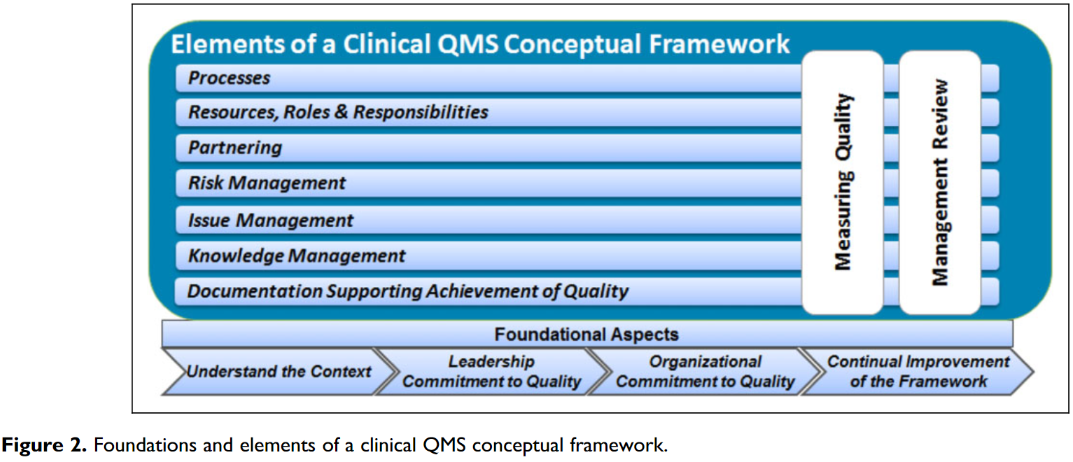
The foundational paper that set the groundwork for implementing a quality management system (QMS) through which organizations can systematically plan and achieve their quality objectives. Paper addresses both the culture and system components that are required to achieve.
Components of the framework helps organization compartmentalize and deliver on the final vision and strategy. Key components within which we are foundational include:
Understanding the context (Internal & External environments)
Leadership Commitment to Quality (e.g., proactive risk mitigation)
Organizational Commitment (e.g., ownership by everyone)
Continuous Improvement (e.g., never satisfied with status quo)
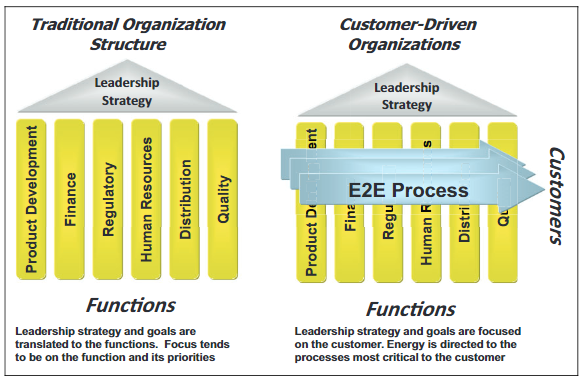
Interlocking SIPOCs: Bringing Lean Strategies into the Digital Age
Process management is obviously important in any organization that is looking to achieve scalability and repeatability and thereby a strategy for building integrated processes at various levels of the organization is required. A method by which one can achieve these processes is through interlocking SIPOCs whereby the output of one process is the input of another process. In such a way, your creating a series of processes that can be linked into a graphical network thereby driving at transparency and clearly defined accountabilities. Within the community of knowledge management, this is done via linked data or semantic web.
Components of the framework
Define and Characterize Processes (Processes at varying levels of the organization - See Interlocking SIPOCs)
Determine Process Documentation strategy (Process map then documentation - digital workflows)
Drive Flawless execution through a learning approach (drives at recording the actual process not just theoretical)
Monitor and improve process performance (Digital signatures of volume, veracity, velocity need to be taken into account)
A Knowledge Management Framework and Approach for Clinical Development
Knowledge management is probably one of the most difficult problems to tackle in this modern digital age for the shear volume, veracity, variety and velocity at which new content is generated makes it difficult to reassemble if deliberate actions for organization and tagging where not taken before hand. Fortunately there’s hope, for we’re not in this alone, literally the entire world is struggling with this problems and scientists, technologists, engineers and mathematicians (STEM) have been deliberately attacking this problem through the creation of art (visualizations) - thereby transforming STEM to STEAM.
Driving a knowledge management framework in an organization enables exchange of information between people and systems seamlessly and deliberately which enables:
Lowers errors due to lack of data transcription (i.e., copy/paste)
More repeatable and predictable outcomes leading to increased flexibility and agility for the business
Ultimately drives innovation and continuous improvement practices within the ecosystem of systems and humans (i.e., get the systems working for humans not the other way around)
Quality Risk Management Framework: Guidance for Successful Implementation of Risk in Clinical Development
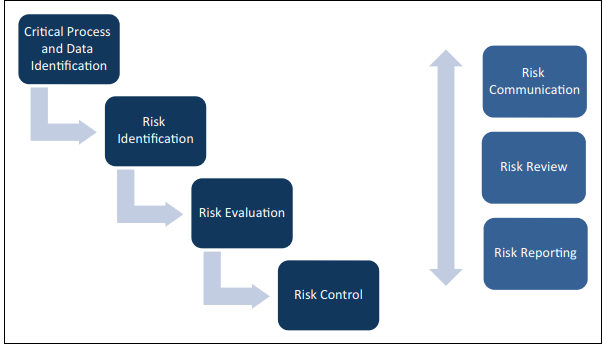
Risk management is a key term used across many organizations as an effective means to communicate broader sustained exposures to the organization and thereby drive a more end to end mindset focused upon the patients safety and efficacy. The critical component on establishing an effective risk management framework is following the entire 4 step process as outlined below.
The minimal requirements for an effective risk management methodology based on ICH E6(2):
Critical Process and Data Identification (e.g., prior to identification of critical - you need to define the process itself - hence the homosapien bioreactor work)
Risk Identification (arises from the tracking between process steps and quality attributes/KPI’s associated)
Risk Evaluation (further refinement of risk identification for prioritization)
Risk Control (defining the mechanisms you are going to take to control those risks)
1.2.2 - Why You Must Keep Data Human-Readable — Even Years Later
When working in regulated environments — especially in life sciences — it’s not enough to just store your data. You must store it in a way that ensures it can be read, interpreted, and audited years down the line. This is more than a best practice — it’s a regulatory requirement.
This requirement comes from 21 CFR Part 11, which governs electronic records and signatures. Specifically:
21 CFR 11.10(c) requires that records are “accurate and ready for retrieval” throughout their retention period.
The FDA’s 2018 guidance on data integrity reinforces that if records are stored in non-human-readable or proprietary formats, companies must retain the software or system needed to render them readable.
If you save data in a format that only your application can read, you must keep that application around — or make sure the data is also available in a human-readable format.
This ensures that critical records don’t become inaccessible just because the original software is obsolete.
Regulations don’t just care that you kept the data — they care whether you (or an auditor) can actually understand it years later. If it’s locked away in a black box, you’re on shaky ground.
Need help aligning your records retention with regulatory expectations? Reach out to your compliance or quality team — or let us know how we can help.
1.3 - Control Strategies
A risk-based approach to defining a control strategy using ICH QbD principles — linking knowledge space, design space, and control space.
Introduction to Control Strategy, Design Space, and Knowledge Space in Manufacturing#
In modern manufacturing, especially in regulated industries like pharmaceuticals, ensuring product quality is paramount. The International Conference on Harmonisation (ICH) introduced the concept of Quality by Design (QbD) to promote a more robust and scientific approach to product and process development. Central to QbD are the concepts of Control Strategy, Design Space, and Knowledge Space, which together ensure that manufacturing processes consistently produce high-quality products. Here’s a breakdown of these key elements:
The Knowledge Space encompasses the full understanding of the product, the process, and the interaction between process parameters and product quality. It is derived from scientific research, prior knowledge, experimental data, and risk assessments. The Knowledge Space includes both known and unknown factors, as well as areas where more data is needed to reduce uncertainty.
In the context of QbD, developing a robust Knowledge Space means gathering comprehensive data on raw materials, process variables, and equipment characteristics to inform decisions on the design and optimization of the manufacturing process.
The Design Space is a subset of the Knowledge Space and represents the multidimensional range of input variables (e.g., temperature, pressure, flow rates) and process parameters that have been shown to provide assurance of product quality. Operating within the Design Space ensures that the process remains controlled and that the final product meets predefined quality criteria.
ICH Q8 defines the Design Space as “the multidimensional combination and interaction of input variables (e.g., material attributes) and process parameters that have been demonstrated to provide assurance of quality.” In practical terms, the Design Space allows flexibility in manufacturing processes as long as operations remain within this validated region.
The Control Strategy refers to the planned set of controls that ensure process performance and product quality. It is developed based on the understanding gained from the Knowledge Space and is applied to maintain operations within the boundaries of the Design Space. Control strategies may involve real-time monitoring, in-process testing, and quality control checks, ensuring that variations in critical process parameters are detected and managed promptly.
The Control Strategy ensures that even if there are small deviations, corrective actions can be taken to maintain product quality. It is a proactive approach to managing variability and mitigating risks.
In the QbD framework, the Knowledge Space forms the foundation of understanding, helping to identify critical quality attributes and process parameters. The Design Space is then developed from this understanding, defining the safe and effective operating ranges for the process. Finally, a well-structured Control Strategy ensures that the process stays within the Design Space, maintaining product quality and compliance with regulatory requirements.
QbD moves away from the traditional quality approach of testing finished products and instead emphasizes building quality into the process through knowledge, design, and control. This ensures not only consistent product quality but also enhances process efficiency and flexibility, reducing the likelihood of process failures and minimizing the need for extensive post-approval changes.
The past several months have seen a rapid development of new products, as well as the refurbishing of established treatments, in hopes of mitigating the ongoing COVID-19 outbreak. One remarkable feat of this race for a cure is the time it has taken to get several of the prophylaxis/treatment candidates to clinical trials.
Typically, it takes several years for products such as vaccines to be tested on human subjects. Today, several of the COVID-19 vaccine candidates in the market have gone to human testing within only a few months of initial testing. This, of course, has not come without criticisms and backlash from experts regarding possible safety issues that can result from such a short development time span.
The following article provides an overview of the drug development process in hopes of both informing the reader about what it takes to get a new drug product into the market as well as contrasting the typical timeline with that of COVID-19 candidate treatments.
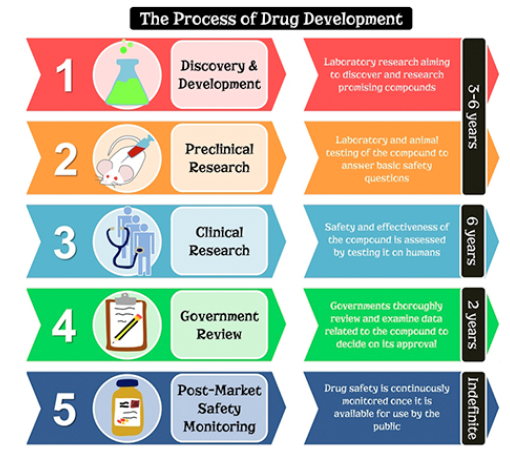
Figure 1 – Drug development process (illustration by Jennifer Harris)
What is drug development?
Drug development is the process that entities, more commonly pharmaceutical companies, have to go through in order to develop their products before they are made available for the public. In the United States, this process is regulated by the Food and Drug Administration (FDA). According to the FDA, the drug development process is broken down into five steps:
1. Discovery and Development 2. Preclinical Research 3. Clinical Research 4. FDA Review 5. FDA Post-Market Safety Monitoring
Discovery and Development The initial process by which new medicines, such as vaccines, are developed can be broken down into the discovery and development phases.
Discovery There are various routes by which a new medicine is discovered. Typically, the process of discovery begins after scientists, and other experts, learn of cellular targets involved in a biological process that are thought to be dysfunctional and cause disease (or in the case of infectious diseases, the detection of an invading pathogen). Cellular targets include cell receptors, enzymes, membranes, genes, etc. Depending on the disease in question, the manipulation of these processes, which can range from impeding, enhancing, or modifying molecular processes, are thought to lead to beneficial effects to treat the condition at hand.
Development Once a new molecular entity (NME) is identified, the process of development can begin. In this step, scientists and clinicians conduct experiments to obtain information on the behavior of the NME in the body and its properties. Some of the key information gathered includes:
Mechanism of action
Potential benefits
Effectiveness
Pharmacodynamics (how the drug affects the body)
Including how it affects different populations
Pharmacokinetics
How it is absorbed, distributed, metabolized, and excreted
Best dose and route of administration
Adverse effects
Interaction with other treatments
Preclinical Research Before an NME is tested in people it must go through a process to find out whether it is safe for use in humans. To do this, researchers build protocols to test these compounds in non-human models. The two types of pre-clinical research include in vitro, or outside a living organism such as in a test tube, and in vivo studies which involve studies done in living organisms. These studies, which are typically small, provide information on the toxicity profile of the NME. After preclinical studies are done, researchers analyze their findings and decide whether their product should be tested on people. At this point, entities can file an Investigational New Drug (IND) application to the FDA which must include all pertinent information including preclinical data, clinical protocols for studies that will be conducted, manufacturing information, and information regarding the investigator. The FDA review team has 30 days to review the original IND submission.
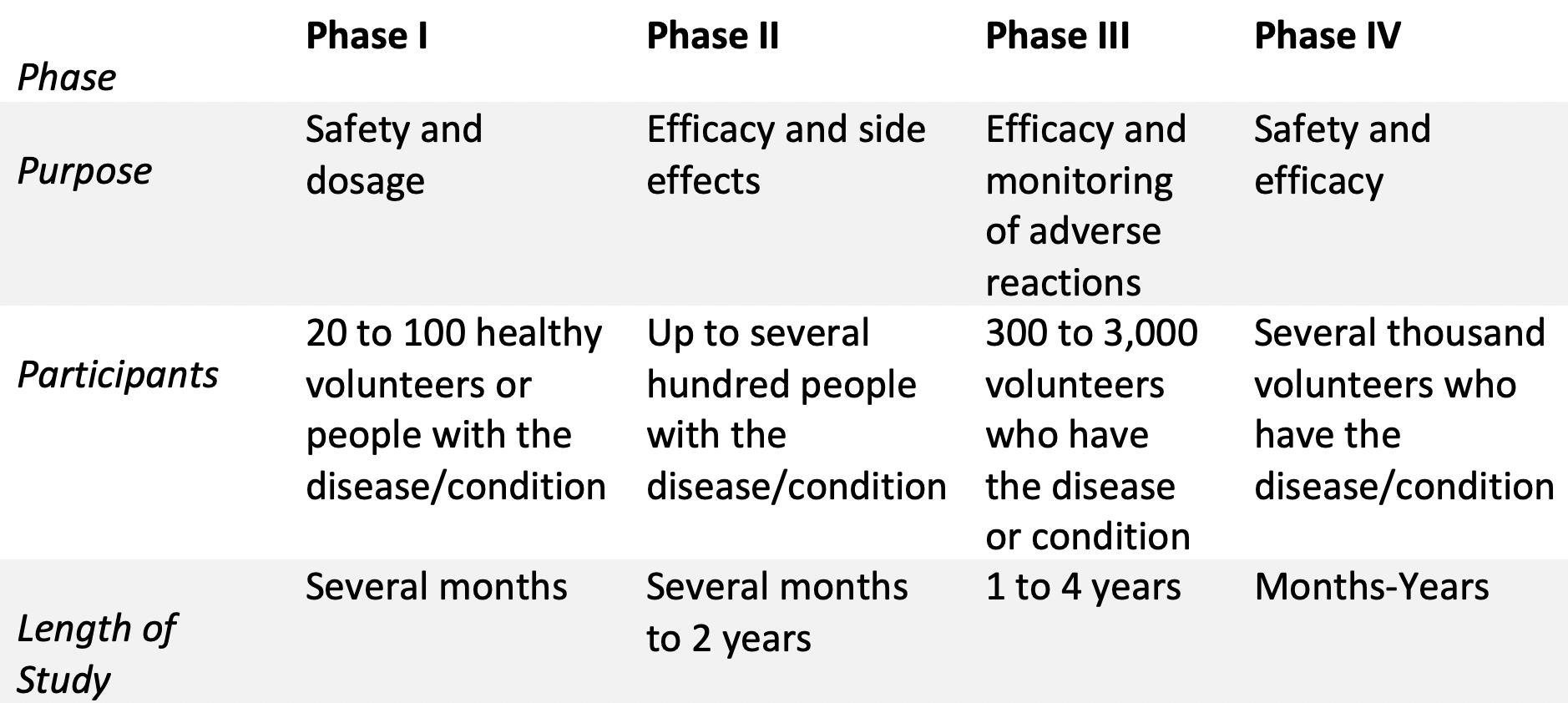
Clinical Research After the FDA approves an IND submitted by a sponsor (i.e. entity developing the drug) clinical trials can begin. There are three clinical phase studies that take place before a drug gets approved, with each having its own purpose. A fourth phase is carried out after the product is approved by the FDA, which centers on the products safety and efficacy profile. The following table provides an overview of the different phases of clinical research.
Table 1 – Summary of clinical research phase studies.
Fun facts: • Approximately 70% of drug candidates move to phase II • Approximately 33% of drug candidates move to phase III • Approximately 25-30% of drug candidates move to phase IV
FDA Review Once a sponsor has sufficient evidence from preclinical and clinical studies that their drug is safe and effective for its intended use, a New Drug Application (NDA) can be filed to the FDA for approval. An NDA contains all pertinent information regarding the use of the drug for the intended population. Some of the information contained within an NDA, along with clinical studies data, includes:
Proposed labeling
Safety updates
Drug abuse information
Patent information
Any data from studies that may have been conducted outside the United States
Institutional review board compliance information
Directions for use
Once the FDA has received a complete NDA their review team has 6-10 months to decide whether to approve the new drug. If the NDA gets approved, the FDA works with the sponsor in a process called labeling. Labeling is a process by which an applicant develops or refines the prescribing information of their product. This process allows for an objective description of how to best use a new medication.
FDA Post-Market Safety Monitoring Although the drug development process provides important information about a drug’s safety and efficacy profile, it is very difficult to gather all information regarding the new drug product at the time of approval. Thus, the complete picture regarding the drug safety profile will evolve over time as the product enters the market. To address this, the FDA has developed several programs, such as MedWatch and MedSun, where patients, health professionals, and manufacturers can report any problems that may arise with an approved product. Once problems are noted with any approved drug, the FDA will review each case and take measures to mitigate any safety issues such as adding cautions to the usage information.
The core principles of the scientific method—asking questions, forming hypotheses, designing experiments, collecting data, and sharing results—remain unchanged. However, in the digital era, how we document, analyze, and communicate our work must evolve to ensure research is transparent, reproducible, and collaborative.
Inspired by The Turing Way, this section explores methodologies and best practices for reproducible research in pharmaceutical science. The Turing Way emphasizes that reproducibility is not just a technical challenge, but a cultural one, requiring open tools, clear documentation, and inclusive collaboration.
Just as you wouldn’t store your money in a bank that makes it hard to withdraw, you shouldn’t use digital tools that lock away your data. Choose platforms and software that support open standards, easy export, and sharing—ensuring your research remains accessible and reusable.
Traditionally, scientists have relied on paper notebooks for discovery and documentation. In the digital age, however, research data and workflows are often managed as “IT problems,” disconnected from the scientific process. This can lead to fragmented records, poor reproducibility, and barriers to collaboration.
To ensure global scalability and long-term accessibility:
Every recommended tool must meet open-source criteria.
Workflows should be designed for interoperability, transparency, and ease of use.
Documentation and code should be shared in public repositories whenever possible.
By aligning with the principles of The Turing Way, we can foster a culture of reproducible, open, and collaborative science—accelerating discovery and ensuring that our work benefits the broader scientific community.
Identifying and addressing the key scientific and operational questions that drive pharmaceutical development, from safety and efficacy to manufacturability and patient delivery.
The Role of Critical Questions in Pharmaceutical Development#
Every successful pharmaceutical product begins with a set of critical questions. These questions guide the scientific method and shape each phase of development, from early discovery through to commercial manufacturing and patient delivery. Identifying and answering these questions is essential to ensure that medicines are not only safe and effective, but also manufacturable at scale and accessible to patients.
Critical questions do not end once a product reaches the market. Continuous improvement, post-market surveillance, and lifecycle management all depend on asking and answering new questions as knowledge, technology, and patient needs evolve.
How do process parameters and material attributes impact my final product quality attributes?
How does the scale of my process impact the performance of the process?
What is the stability of my form and formulations?
What are the most significant risks to patient safety and how can they be mitigated?
How can manufacturing be optimized to ensure both quality and cost-effectiveness?
What strategies will ensure reliable delivery and patient access worldwide?
By systematically addressing these critical questions at each stage, pharmaceutical teams can develop products that are not only innovative and effective, but also practical to manufacture and deliver—ultimately ensuring that patients receive the therapies they need.
2.2 - Design
Applying design thinking and contextual knowledge to shape effective, innovative, and value-driven pharmaceutical research and manufacturing projects.
A design thinking approach is essential for clearly defining the outcomes you aim to achieve in pharmaceutical research and manufacturing. This phase is about being prescriptive and intentional—identifying the business value, reviewing historical knowledge, and determining what gaps must be filled to move forward.
Scoping projects during the design phase is critical. It allows teams to “dare to dream” and innovate, while ensuring that every experiment or process improvement is grounded in a clear understanding of context. In manufacturing, this context is often captured through material genealogy—the detailed record of how materials and processes are linked throughout production.
Understanding and documenting this genealogy is foundational for reproducibility, traceability, and process optimization. For a deeper dive into the importance of material genealogy in manufacturing, see this background paper: 2012-batch-genealogy-justin-neway.pdf
2.3 - Data Collection
Effective data collection is the backbone of scientific progress in pharmaceutical research and manufacturing. To answer the critical question, teams must gather both historical and new data, building a robust foundation for process knowledge and understanding (PKU).
Data collection is not just about amassing information—it’s about ensuring that the right data is captured, in the right format, and with the right context. This enables meaningful analysis, supports regulatory compliance, and drives continuous improvement.
Key considerations for data collection include:
Defining Data Needs: What specific data is required to address your scientific or operational question? This may include process parameters, material attributes, environmental conditions, and outcomes.
Historical Data Mining: Leveraging existing datasets can reveal trends, variability, and potential risks. However, legacy data may be incomplete or inconsistent, requiring careful curation and validation.
Designing New Experiments: When gaps exist, targeted experiments should be designed to generate high-quality, reproducible data. This includes clear protocols, standardized measurements, and rigorous documentation.
Data Integrity and Traceability: Ensuring data is accurate, complete, and attributable is essential for both scientific validity and regulatory compliance (see ALCOA+ principles).
Integration and Accessibility: Data should be stored in interoperable formats and systems that facilitate sharing, analysis, and long-term access.
For a deeper exploration of these concepts and practical strategies for building process knowledge and understanding, see this paper by Fermier & Higgins (2018), which discusses the challenges and best practices in pharmaceutical data collection and PKU.
2.4 - Aggregation
Strategies and best practices for aggregating diverse pharmaceutical data sources into unified, analyzable, and reproducible datasets.
Aggregation Strategies Come in Many Shapes and Sizes#
Once data has been collected, it often exists in a variety of formats—PDFs, CSVs, Excel files, databases, and more. The challenge is to bring this disparate information together in a way that enables meaningful analysis, supports decision-making, and maintains data integrity.
Aggregation is not a one-size-fits-all process. The optimal strategy depends on your goals, available resources, and the complexity of your data landscape. The focus should always be on fit-for-purpose approaches that optimize speed, cost, and quality.
Conformance to a Common Data Model: Standardizing data into a unified structure is essential for downstream analytics, regulatory submissions, and reproducibility.
Data Cleaning and Transformation: Raw data often requires cleaning, normalization, and transformation to ensure consistency and usability.
Automation vs. Manual Integration: Automated pipelines can accelerate aggregation and reduce errors, but manual curation may be necessary for complex or legacy datasets.
Documentation and Traceability: Every step in the aggregation process should be well-documented to ensure transparency and reproducibility.
Our recommended strategy is to follow a recipe-based approach, which provides a structured, repeatable method for aggregating and transforming data. This approach emphasizes modularity, transparency, and adaptability—key principles for robust data management in pharmaceutical research and manufacturing.
For a detailed discussion and practical examples, see the following paper:
2.5 - Analysis
Exploring the spectrum of analytical methods in pharmaceutical research and manufacturing, from foundational statistical process control to advanced machine learning and AI.
Analysis is the phase where data becomes actionable insight. In pharmaceutical research and manufacturing, analytical methods span a broad spectrum—from foundational statistical techniques to cutting-edge machine learning and artificial intelligence.
At its core, analysis in pharma often begins with Statistical Process Control (SPC). SPC uses statistical methods to monitor and control processes, ensuring that manufacturing remains consistent and within defined quality limits. Key tools include:
Control charts for tracking process stability
Capability analysis to assess whether a process meets specifications
Trend analysis for early detection of deviations
SPC is essential for maintaining product quality, meeting regulatory requirements, and driving continuous improvement.
As processes and data become more complex, multivariate analysis techniques—such as Principal Component Analysis (PCA) and Partial Least Squares (PLS)—help uncover relationships among multiple variables. These methods are widely used in:
With the explosion of data in pharma, advanced analytics and machine learning (ML) are transforming how we extract value from information. Applications include:
Predictive modeling for process outcomes and product quality
Anomaly detection to identify rare events or out-of-spec results
Automated image analysis in quality control and pathology
Natural language processing for mining scientific literature and regulatory documents
Machine learning models can learn from historical and real-time data, enabling proactive decision-making and process automation. However, successful deployment requires careful attention to data quality, model validation, interpretability, and regulatory compliance.
Artificial intelligence (AI) is poised to further accelerate drug discovery, development, and manufacturing. From generative models for molecule design to digital twins of manufacturing processes, AI is opening new frontiers in pharmaceutical science.
By combining foundational statistical methods with advanced analytics and AI, the pharmaceutical industry can achieve greater efficiency, quality, and innovation—ultimately delivering better outcomes for patients and society.
2.6 - Reporting
Best practices for transparent, reproducible, and regulatory-compliant reporting in pharmaceutical research and manufacturing.
Reporting is the final, critical phase of the scientific and manufacturing process. It transforms data, analysis, and insights into a structured narrative that communicates findings, supports decision-making, and ensures compliance with regulatory requirements.
Transparency: Reports should clearly document methods, data sources, analyses, and results, enabling others to understand and reproduce the work.
Regulatory Compliance: In pharmaceuticals, reporting must meet stringent standards set by regulatory agencies (e.g., FDA, EMA, ICH). This includes traceability, data integrity, and adherence to guidelines such as 21 CFR Part 11.
Audience Awareness: Reports should be tailored to their audience—scientists, engineers, management, or regulators—highlighting relevant details and actionable insights.
Data Visualization: Effective use of tables, charts, and graphics can make complex data more accessible and support better decision-making.
Archiving and Accessibility: Reports must be stored securely and remain accessible for audits, inspections, and future reference.
Following principles from The Turing Way, reproducible reporting means sharing not just results, but also the underlying data, code, and workflows. This fosters trust, accelerates innovation, and enables collaboration across the scientific community.
Effective reporting closes the loop in the scientific method—turning research and manufacturing data into knowledge that drives progress, compliance, and better outcomes